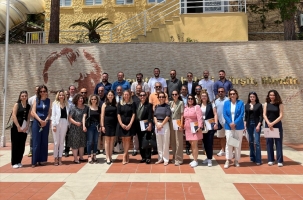
The External Stakeholder Meeting, organized by the Vocational School of Tourism and Hotel Management, Departments of Tourism Management and Business Administration at Alanya University, was held with ...
Course Content
Course Contents
Click a course name to see its content.
Year 1 · Fall Semester8 courses
TUR 101Introduction to Tourism
The Introduction to Tourism course is structured to cover the definition of tourism; its economic, social and environmental impacts; the structure of the industry; supply and demand dynamics; destination and product management; tourism policy and planning; marketing and promotion strategies; accommodation and food and beverage businesses; guiding and travel services; alternative types of tourism; sustainability and ethical principles; and current trends and future perspectives.
TUR 103Tourism Marketing
The Tourism Marketing course is structured to cover basic marketing concepts, marketing approaches specific to the tourism sector, digital marketing strategies, integrated marketing communication (IMC), customer relationship management (CRM), sector trends and innovative practices, together with applications and case analyses.
TUR 105Tourism Economics
The Tourism Economics course is structured to cover an introduction to tourism economics, basic economic concepts and models, the economic impacts of tourism, investment and financing, statistical analysis and data management, sustainable tourism and the economy, globalization, competition and economic trends, together with case analyses and applied work.
TUR 107Introduction to Business
The Introduction to Business course covers the concept and history of business, the business environment and environmental factors, management and organization, business functions, strategic management and planning, entrepreneurship and innovation, and business ethics and social responsibility, supported by applied work and case analyses.
TUR 109Occupational Health and Safety
The Occupational Health and Safety course is structured to cover the basic concepts and principles of occupational health and safety, legal regulations and legislation, risk assessment and management, the use of protective equipment, occupational accidents and diseases, emergency management and first aid, sector-specific practices, and training, awareness and continuous improvement processes.
GS 103Computer
The Computer course comprehensively covers basic hardware and software components, operating systems and office programs. It deals with how computers work, data processing, internet and network technologies, cyber security and basic programming concepts, with emphasis on the word processing, spreadsheet and presentation programs widely used in business today. Students aim to develop their computer literacy and use technology effectively in their academic and professional lives.
ING 111General English I
The General English I course comprehensively develops basic language skills in reading, writing, listening and speaking in English. It covers everyday conversation patterns, basic grammar rules, vocabulary, pronunciation and communication strategies, with dialogue work, interactive activities and listening-comprehension practice that support effective communication in different contexts. Students aim to understand and use English at a basic level and express themselves more comfortably in a foreign language.
TKL 101 / YTO 101Turkish Language I / Turkish Language I for International Students
The Turkish Language I course comprehensively covers the structure, workings and usage rules of Turkish. It deals with basic topics such as the definition and importance of language, the historical development of Turkish, phonetics, word structure, spelling rules and punctuation, with text analysis and applied work that support correct and effective use of language in academic and everyday written communication. Students aim to use Turkish correctly and effectively in writing and speech and gain language awareness and expressive competence.
Year 1 · Spring Semester7 courses
TUR 102Internship
Please see the Internship section.
TUR 104Tourist Behavior
The Tourist Behavior course covers the foundations of tourist behavior, motivation and the travel decision process, perception, attitudes and satisfaction, tourist segmentation and profiling, social and cultural influences, and digital transformation and online interaction, supported by research methods and case analyses.
TUR 106Tourism Law, Regulations and Taxation
The Tourism Law, Regulations and Taxation course covers an introduction to tourism law, national and international legal regulations, contracts and commercial relations, taxation, consumer rights and protections, permits, licenses and inspections, and environmental law and sustainability, supported by applied work and case analyses.
TUR 108Sociology of Tourism
The Sociology of Tourism course deals, within the framework of basic concepts and sociological approaches, with the social impacts of tourism, cultural interaction and identity, tourist behavior and social participation, relations between local people and tourism, gender, class and ethnic dynamics, and sustainable tourism and social responsibility, supported by applied work and case analyses.
TUR 110Hygiene and Sanitation in Tourism
The Hygiene and Sanitation in Tourism course comprehensively covers the basic principles of hygiene and sanitation in tourism businesses, food safety practices, legal regulations and best hygiene practices in the sector. It deals with the characteristics and transmission routes of microorganisms, personal hygiene, food hygiene and safety, water and waste management, pest control, and cleaning and disinfection methods. Hygiene standards in accommodation, food and beverage and travel services, the HACCP (Hazard Analysis and Critical Control Points) system, hygiene inspections and crisis management are also covered, giving students theoretical and practical knowledge.
ING 111General English II
The General English II course aims to take students' basic English skills to a more advanced level. It covers reinforcing grammar, expanding vocabulary, developing reading comprehension and improving written and spoken communication. Through listening and speaking activities, students learn to use English more fluently and accurately in everyday and academic settings. With interactive exercises and practice, students aim to use English effectively as a means of communication.
TKL 101 / YTO 101Turkish Language II / Turkish Language II for International Students
The Turkish Language II course aims to develop students' written and spoken expression so that they can communicate effectively in academic and professional life. It covers types of expression, text-building techniques, composition writing, academic writing rules and oral presentation skills, with emphasis on critical reading, text analysis and official correspondence. Through applied work and writing activities, students aim to use Turkish correctly, fluently and effectively.
Year 2 · Fall Semester6 courses
TUR 201Front Office Management and Automation
The Front Office Management and Automation course comprehensively covers the operation of the front office department in the accommodation sector, its management processes and automation systems. It deals with reservation management, check-in and check-out processes, guest relations, revenue management and the software used in the front office, with emphasis on the role of technology in modern hotel management, the effect of digitalization on the guest experience and automation systems that improve the efficiency of front office operations. Students aim to gain competence in front office management through both theory and hands-on work with automation programs widely used in the sector.
TUR 203Kitchen Services Management
The Kitchen Services Management course comprehensively covers kitchen management processes, operational planning and hygiene standards in food and beverage businesses. It deals with menu planning, cost control, stock management, purchasing and the efficiency of kitchen workflow, emphasizing food safety, hygiene and sanitation and kitchen management approaches in line with international standards. Alongside theory, students do applied work on managing kitchen operations and aim to master professional kitchen management processes in the sector.
TUR 205Tourism Geography
The Tourism Geography course comprehensively covers the geographical foundations of tourism, the natural and cultural characteristics of destinations and the spatial distribution of tourism activities. It deals with the formation of tourist regions, the physical and human geographical factors affecting tourism, and the effects of climate, transport and natural resources on tourism, with emphasis on environmental impacts and destination management within a sustainable tourism approach. By analysing the global and regional distribution of tourism activities, students aim to gain competence in destination management and planning.
TUR 209Accommodation Management
The Accommodation Management course comprehensively covers the management processes, operational activities and strategic planning of accommodation businesses. It deals with hotel management, reservation systems, room management, guest relations, revenue management and quality control, with emphasis on sustainability, digitalization and innovative practices that improve the guest experience in the accommodation sector. By analysing the management processes of accommodation businesses, students aim to gain professional management skills in line with current trends in the sector.
GE 201Social Responsibility and Ethics
The Social Responsibility and Ethics course comprehensively covers the ethical responsibilities of individuals and institutions towards society, the principles of social sustainability and ethical decision-making in business. It deals with corporate social responsibility practices, business ethics principles, sustainable development goals, ethical leadership and social awareness, with emphasis on ethical dilemmas, the consequences of unethical behavior, social justice and transparent management. By analysing ethical decision-making processes, students aim to act as responsible individuals in business and social life and to build sustainable values.
HIST 201 / YTT 201Atatürk's Principles and History of the Turkish Revolution I / for International Students
The course covers the history of the revolution that the Turkish nation went through under Atatürk's leadership. By examining the causes of the collapse of the Ottoman State, it evaluates, in the light of documents, how the Republic of Türkiye was founded from a state that had effectively ceased to exist. It sheds light on recent history by focusing on the meaning and importance of the principles and reforms, and discusses global problems and possible solutions from the past to the present.
Year 2 · Spring Semester6 courses
TUR 212Sector Analysis and Case Studies in Tourism
The Sector Analysis and Case Studies in Tourism course analyses the structure, dynamics and competitive conditions of the tourism sector. It deals with the components of the tourism industry, market trends, consumer behavior and tourism policies, and examines case studies on different types of tourism, focusing on the opportunities and challenges faced in the sector. By learning sector analysis methods, students aim to gain competence in strategic planning and decision-making for tourism businesses.
TUR 214Food and Beverage Management and Automation
The Food and Beverage Management and Automation course comprehensively covers the management processes, operational efficiency and digitalization practices of food and beverage businesses. It deals with menu planning, cost control, stock management, purchasing and customer satisfaction, with emphasis on the automation systems used in the sector, order and payment management, kitchen automation and data-driven decision-making. By learning the software and digital solutions widely used in the sector, students aim to gain effective management skills for modern food and beverage businesses.
TUR 216Housekeeping Management
The Housekeeping Management course comprehensively covers the management processes, operations and quality standards of the housekeeping department in accommodation businesses. It deals with room cleaning and order, textile and laundry management, hygiene and sanitation practices, and stock and materials management, with emphasis on service standards that increase guest satisfaction, staff management and sustainability practices. By gaining theoretical and practical knowledge of housekeeping management, students aim to acquire professional management skills in the accommodation sector.
TUR 218Travel Agency and Tour Operator Management
The Travel Agency and Tour Operator Management course comprehensively covers the management processes, operations and marketing strategies of travel agencies and tour operators. It deals with creating travel packages, reservation systems, customer relationship management, and sales and distribution channels, with emphasis on current trends in tourism, digitalization, sustainable tourism practices and crisis management. By acquiring the necessary theoretical and practical knowledge, students aim to gain effective management skills in travel agency and tour operation.
TUR 220Sustainable Tourism
The Sustainable Tourism course comprehensively covers strategies for ensuring the long-term sustainability of the tourism sector by balancing its environmental, economic and socio-cultural impacts. It deals with ecotourism, green tourism practices, the protection of natural and cultural heritage, community participation and ethical tourism principles, with emphasis on reducing the carbon footprint, waste management, renewable energy use and sustainable destination management. By learning about sustainable tourism policies and practices, students aim to gain management skills that embrace an environmentally friendly and responsible approach to tourism.
HIST 202Atatürk's Principles and History of the Turkish Revolution II / for International Students
The course covers the history of the revolution that the Turkish nation went through under Atatürk's leadership. By examining the causes of the collapse of the Ottoman State, it evaluates, in the light of documents, how the Republic of Türkiye was founded from a state that had effectively ceased to exist. It sheds light on recent history by focusing on the meaning and importance of the principles and reforms, and discusses global problems and possible solutions from the past to the present.